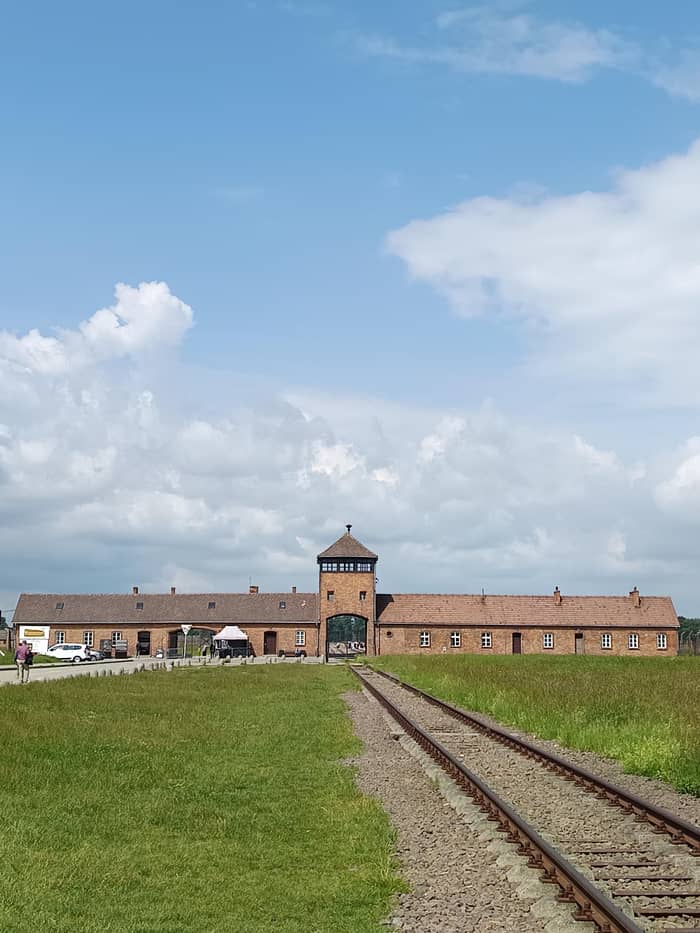
Individual visitors
Guided entry pass
Booked yourself
- Book onvisit.auschwitz.org
- English startsFrom 08.30
- LengthAbout 3.5 hours
Hands-on checklist
Answer in brief
For the Auschwitz Museum, the rules are simple: a bag no larger than 35x25x15 cm, your entry card and ID, respectful dress and conduct, no photos in the marked rooms, and no visit recommended for children under 14.
Key rules
Preparation · 9 items
Tick each item when it is done. Your place is saved on this device.
0 / 9 ready
All set. Only the date and the number of guests are left to choose.
Book a seatBefore an Auschwitz Museum tour from Krakow, read the Memorial's own rules: what you may bring, how to dress and behave, where photography stops, and its advice on children.
Editorial team, auschwitzandsaltminetour.com · Updated November 9, 2026 · Takes 8 min
An Auschwitz Museum tour from Krakow is not a normal museum visit, and the Memorial runs it under its own regulations, valid from 1 July 2026 in their current form.6 Most of them follow from the nature of the place: a former German Nazi camp, a cemetery and a museum at once. The Memorial asks for solemn, respectful behaviour from everyone, and for clothing that suits a place like this.4 Read the rules once before you travel, and the day itself becomes simpler.
Entry is personal, and it is checked. Each visitor needs a named pass covering both sites; passes are capped, and visit.auschwitz.org is the only place to get them.7,8 The Memorial requires visitors to carry their personal entry card and an identity document.3 Tours from Krakow book the passes for you, and their listings warn that a mismatch between the booked name and your ID can cost you entry.
Arrive early for the security check. Be there half an hour before your tour time, as the Memorial requests, and expect security staff to check people and bags, X-ray scanners included.9,10 None of this should worry a respectful visitor, but allow time for the line at busy hours. Keep your entry card and your ID in a pocket you can reach easily, and pack your bag so that it opens quickly for inspection.
At a glance
| Topic | Rule | Where |
|---|---|---|
| Bags | 35x25x15 cm maximum | Whole Memorial |
| Food | Not consumed | Visiting areas |
| Photos | Banned | Block 4, Room 5; Block 11 basement |
| Phone calls | Banned | Inside buildings; Block 11 courtyard |
| Candles | Allowed | Execution Wall; International Monument |
| Audio guides | Banned | Whole Memorial |
From the Memorial's regulations for visitors valid from 1 July 2026 and its basic information page.1,14,5,25,26,17,6
The bag rule is strict. Backpacks and handbags brought into the Museum may not exceed 35x25x15 cm, roughly the size of a small daypack.1 Anything bigger stays behind in the vehicle, which on a tour from Krakow means the coach.2 Measure your daypack before you leave the hotel rather than at the gate. If you arrive with a suitcase, there is paid luggage storage, with lockers that carry a maximum load of 30 kg.13
Food is the next point to plan. In the areas open to visitors it is prohibited to consume food, to bring alcohol onto the premises or to smoke tobacco or e-cigarettes.14 Entering under the influence of alcohol is also prohibited.15 Eat a proper meal before the visit, keep snacks for the coach, and carry a small bottle of water in your bag. Tours plan a short break between the camps, 10 minutes on the itinerary of the official tour.
Prams and strollers may not be taken into the blocks and other buildings on the tour.16 A carrier is easier if you travel with a baby, though the age advice below applies to older children too. Sound amplification equipment is banned across the Memorial, and so are audio guides and video guides, whether dedicated devices or phone apps.17 On a guided tour you hear the educator through a headset instead: groups of more than 10 people must use a headphone guiding system.11
There is no formal dress code, but the rule is plain enough: your clothing has to suit the place.4 A sensible reading is modest clothing, no slogans that could offend, and nothing that would look out of place at a memorial service. Comfortable shoes matter more than anything: the Memorial notes about 1300 metres of walking at Auschwitz I alone, and the roads at Birkenau are uneven.31,32
Follow the educator and the Museum staff, and stay within the areas open to visitors. With a guided entry pass, you may not leave the group to continue the visit on your own.12 Areas marked No Entry are off limits.33 Telephone calls are prohibited inside the buildings on the tour and in the courtyard of Block No. 11, which is a zone of silence.25 Put your phone on silent before you pass the gate, and keep conversations quiet.
Candles and memorial candles may be lit only at the Execution Wall at Auschwitz I and at the International Monument to the Victims at Birkenau.26 Recording the educator's lecture is prohibited.30 In winter, keep to the designated paths: the regulations ask for particular care because of uneven surfaces and limited lighting.34 During heat waves the Memorial may also cut or adjust the route.35
Your situation
Common situations and what the Memorial asks.
If I am coming from the airport with a suitcase
Use the luggage storage
There is paid luggage storage, lockers up to 30 kg.13
If I want to light a candle
Bring it to the Wall or the Monument
Only the Execution Wall and the International Monument are allowed.26
If I travel with a younger child
Reconsider or split the day
The Memorial does not recommend visits under 14.27
If I use a wheelchair
Ask for a free wheelchair or plan ahead
If I want to record the guide
Take notes instead
Recording the educator's lecture is prohibited.30
Official ways in
Individual visitors
Booked yourself
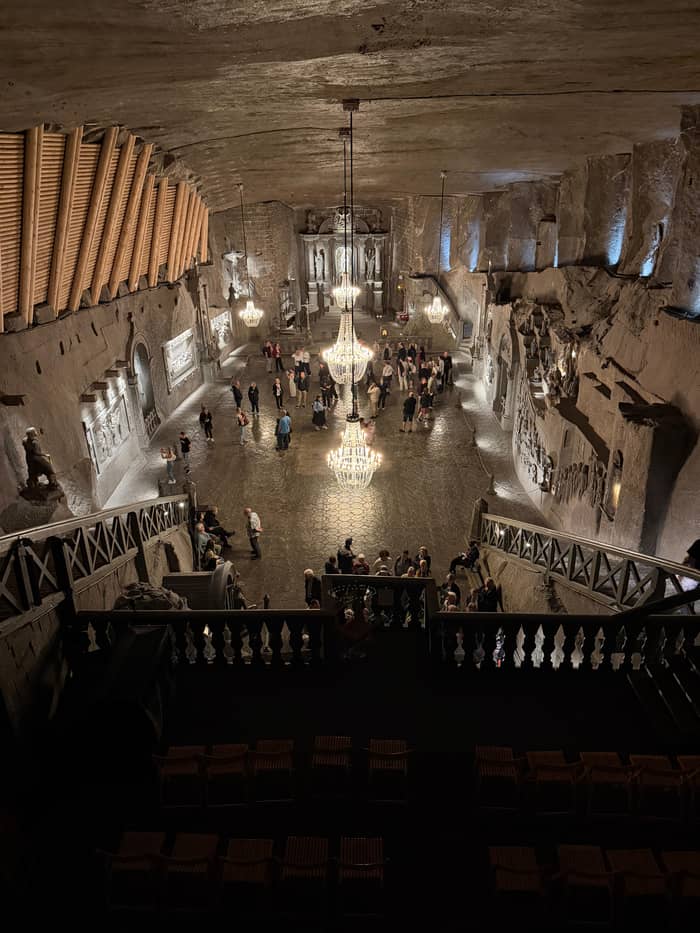
From Krakow
With hotel pickup
Full day
Auschwitz and Wieliczka
You may take photographs for your own purposes without flash and without stands across most of the Memorial.37 There are exceptions. No filming or photography at all is permitted in Block No. 4, Room No. 5, which holds the hair of the victims, or in the cellars of Block No. 11.5,37 Flash and tripods are banned inside all buildings.5 Your educator will remind you at those points; put the camera away before you enter.
Drones are a separate matter. Photography and filming for commercial purposes, in spaces closed to visitors or with a drone require the Museum's prior approval.38 The same applies to film crews and content creators, who must agree the terms with the Museum's press office in advance.39 Leave the drone at home: the airspace above the Memorial is a no-fly zone.40 A good test for your own photos: does a picture record what you saw, or does it turn the place into a backdrop?
You may decide to take very few photos, or none at all; it can help you pay attention. If you do photograph, avoid posed pictures and selfies, especially at the ramp, the gate and the ruins at Birkenau, where other visitors are standing in silence. Phone calls and loud conversations break the silence for others, even outdoors.25 You share the grounds with other groups, and entry passes are limited in number.7
Official tours
Compare tours from Krakow for your group.
Compare all 3 options
Compare tours from Krakow for your group.
≈
View≈
View≈
ViewCurrency conversion uses the ECB reference rate on GetYourGuide from-prices. The exact price is displayed when you book.
On arrival
Arrive
Half an hour before your tour time.9
Bags
Backpacks and handbags no larger than 35x25x15 cm.1
Security
Luggage may go through an X-ray scanner.10
Entry
Show your personal entry card and identity document.3
Headset
Groups of more than 10 use headphones.11
Visit
You may not leave a guided group.12
The Memorial is clear in its advice: it is not recommended that children under 14 visit, and its regulations recommend the Museum for visitors aged 14 and over.27,6 Near the Museum there is a facility where children can be left under supervision during the visit.27 If you travel as a family with younger children, consider splitting the day, with one adult visiting while the other stays with the children in Krakow, or using that facility.
For a teenager of 14 or more, preparation makes the difference.6 Talk beforehand about what the camp was and what they will see: the exhibitions include personal belongings of the victims and photographs.41 Let them know that silence, questions afterwards and strong feelings are all normal. The Memorial offers online lessons on the history of Auschwitz, which work well as preparation, and the visit itself lasts about 3.5 hours.42,43
Students and school pupils aged up to 26, visitors over 75 and disabled visitors can get a reduced pass with a valid document.36 Bring a student card if you have one, and check that the age and the name on it are easy to read. On the day, keep a teenager close to the educator so that the headset works, and plan a calm evening afterwards. Expect questions later, sometimes much later.
Video
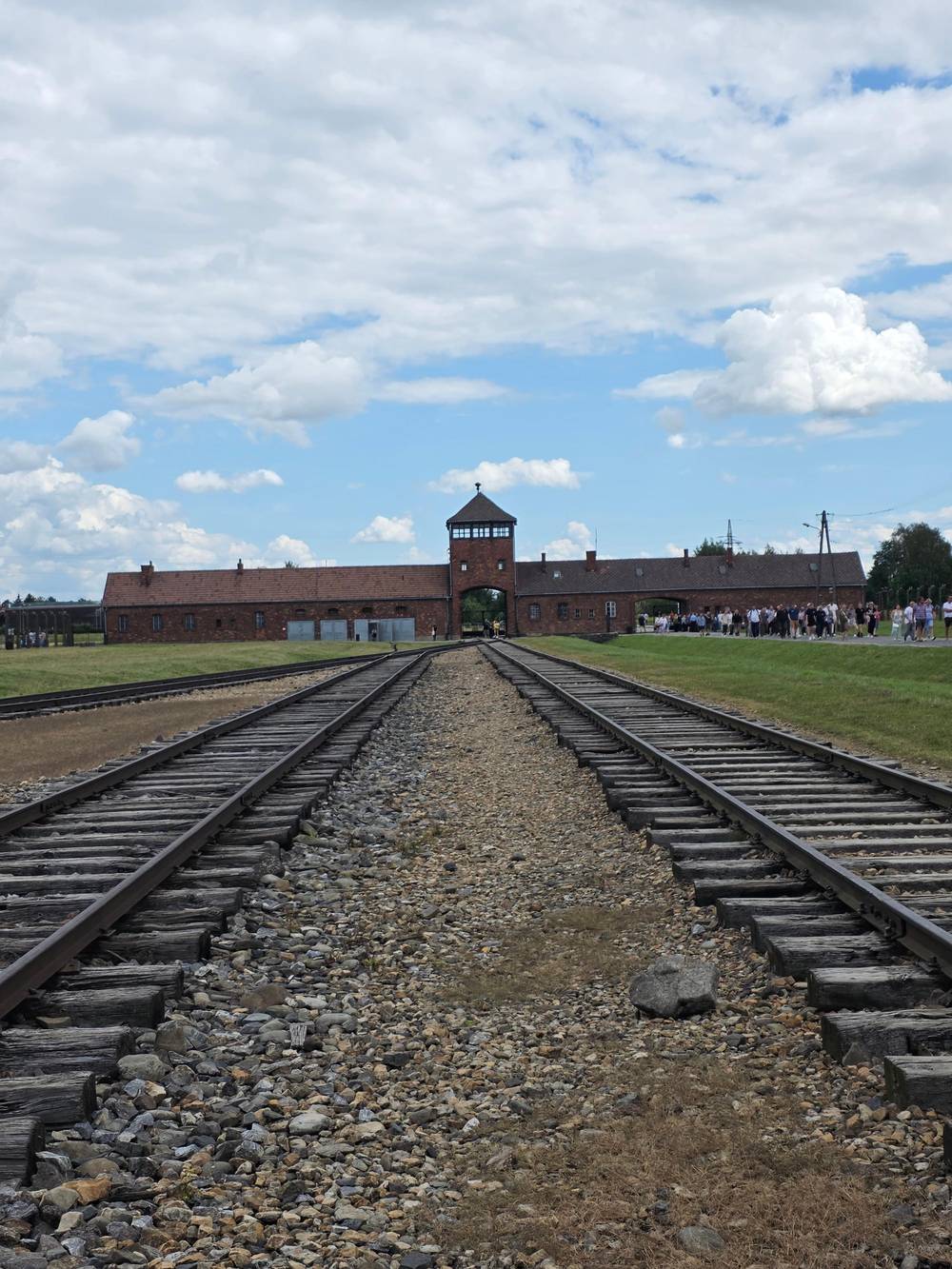
Travel with Col on YouTube · The clip loads only after you tap play.
Visitors to the grounds of the Museum should behave with due solemnity and respect. Visitors are obliged to dress in a manner befitting a place of this nature
The Memorial is a historic site, and it says plainly that moving around the grounds and buildings may be difficult for disabled visitors.28 The Visitor Service Centre lends wheelchairs at no charge, and walkers too; the Memorial asks for advance notice by email to its reservation office.28,44 The museum shuttle between Auschwitz I and Birkenau has a special platform for wheelchair users.45
Wheelchair users see the ground floors only; upstairs rooms and the cellars of Block 11 are closed to them on safety grounds.29,46 Tell the educator at the start if you need a slower pace. At Auschwitz I expect approximately 1300 metres of walking, opening with a passage of nearly 600 m, part of it a tunnel that rises gently.31 At Birkenau the roads are uneven, and entry is through a ground-level passage in the Death Gate building.32,47
If mobility is a concern, tell your tour operator when you book, and ask whether the coach and the itinerary suit you. Visitors holding a disabled person's ID, with a guardian, are an exception to the rule that daytime entry is only with an educator.48,49 Assistance dogs and guide dogs may enter with a training certificate and a valid vaccination record, so bring both documents on the day.50
What does an official Auschwitz tour from Krakow mean in practice? Inside the Memorial, only educators licensed by the Museum are authorised to serve visitors, whichever company drives you from Krakow.51 A guided group may not exceed 30 visitors.52 Educators cover 20 languages, Serbian, Slovak and Portuguese among them.53 Your guide is the Museum's own educator, and the tour leader on the coach is a separate person.
English is the easiest language to find. In July and August, the English tours for individual visitors begin at 08.30 and 9.00, then every 15 minutes from 9.30 until 15.30, with later starts at 16.00 and 16.30.54 Sales of entry passes for language tours close 15 minutes before the tour.55 The official tour sold on this page lists live guides in English, German, Italian, Spanish and French, with hotel pickup or a meeting point, from €18.
Check the small print of any tour. The official tour notes that the tour leader may not speak your language, since the language choice applies to the museum tour, and that the museum tour may sometimes be translated from another language. Ask your operator in advance what happens if the Memorial moves your entry time on the day. Whatever you book, the rules on this page apply in full on the day, and the educator will repeat the most important ones before you enter.
FAQ
Carry your personal entry card and an identity document.3
Clothing has to suit a place of this kind.4
Not in Block No. 4, Room No. 5 or the basement of Block No. 11.5
The regulations recommend the Museum for visitors aged 14 and over.6
Consuming food and bringing alcohol are prohibited in the visiting areas.14
Audio guides and video guides, including apps, are prohibited.17
An Auschwitz tour from Krakow in English is easy to book; English starts run from 08.30.54
Sources
Planning the Auschwitz and Wieliczka day? A real person answers here.